
If you’ve been house-hunting lately, you’ve probably come across two options that look similar at first glance: multiplex homes and townhouses. Both give you your own front door and more space than a condo, and both sit somewhere between apartment living and a detached house. So if you’re like most of the buyers and investors we talk with, you’re wondering the same thing: what’s the actual difference, and which one is right for me?
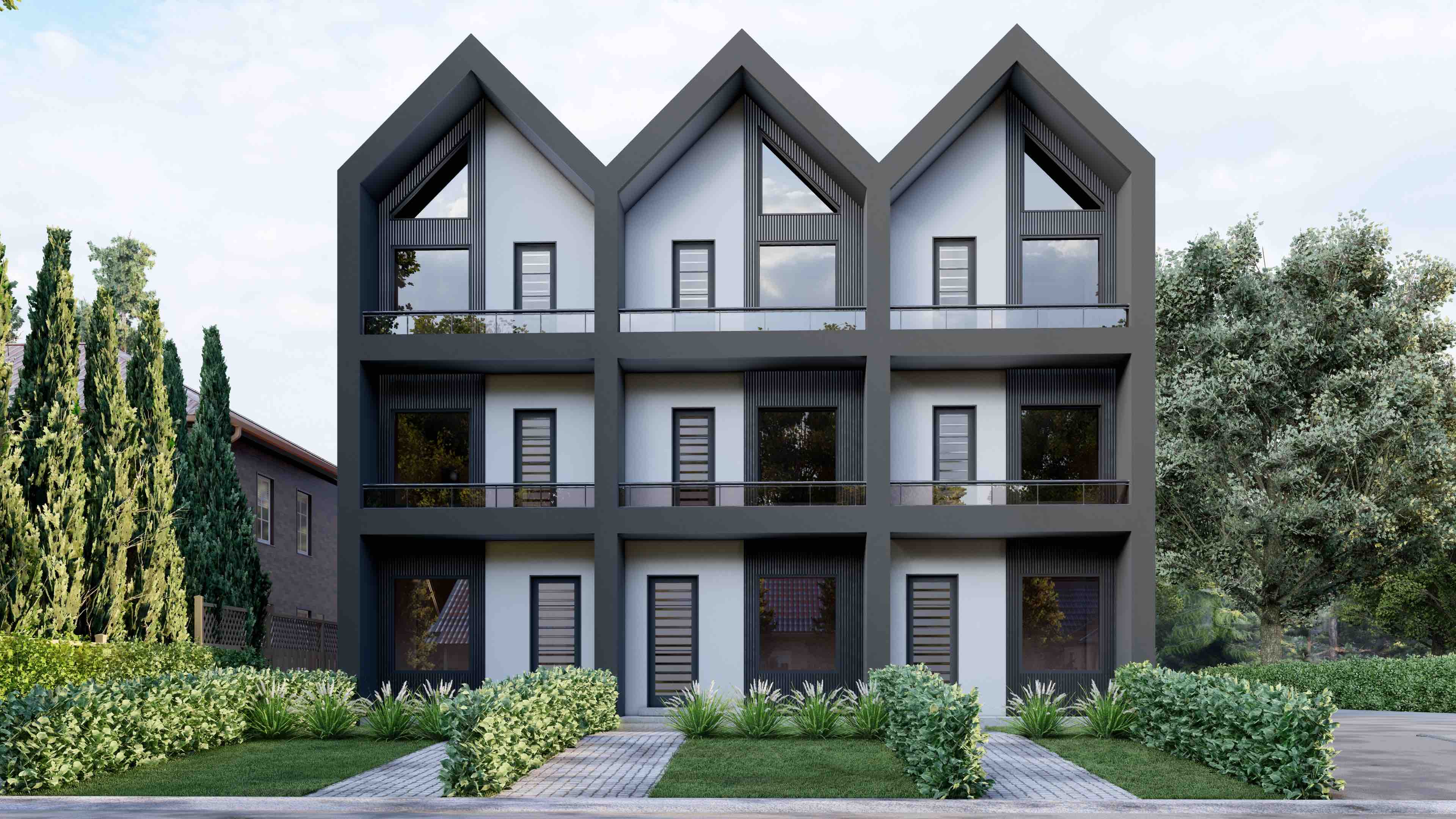
A multiplex is a single residential building divided into a handful of separate homes, often up to about six. The smaller versions have their own names too: a triplex has three homes and a fourplex has four. Once you get into several homes under one roof or one development, “multiplex” is the catch-all term most people use.
What really defines a modern multiplex is its scale. These homes are small on purpose. Instead of a sprawling complex, you get one or two thoughtfully designed buildings sharing a single lot. Each home usually has its own private entrance, its own outdoor space, and its own parking attached right to the unit. Honestly, it feels a lot more like owning a house than living in a development.
A lot of newer multiplex homes are sold with strata title (sometimes called a homeowners’ association elsewhere). That just means you own your individual home and share a small bit of common property with a few neighbours instead of dozens. Because the community is so small, the strata stays simple, the fees stay low, and decisions get made without the red tape you’d find in a 60-household corporation.
You'll hear a few of these terms used interchangeably, and that's mostly okay. A triplex and a fourplex are simply types of multiplex. The number just tells you how many homes share the building. At Asthan Homes, this is exactly the kind of home we specialize in: thoughtfully designed multiplexes where every household has real room to breathe. The appeal is the same across all of them. You get more space and privacy than a condo, lower cost and maintenance than a detached house, and a genuine sense of belonging. New projects don't stay available for long, so if this sounds like the kind of home you're after, it's worth registering for our updates to hear about upcoming releases and pre-sale opportunities first.
If multiplexes feel like a recent arrival, that’s because, in their current form, they are. Across North America, cities and provinces have been reforming the old zoning rules that reserved entire neighbourhoods for single detached houses. The goal is “missing middle” housing: ground-oriented homes that fit naturally between a high-rise condo and a detached house, and that more families can actually afford.
The result is a genuinely new option for buyers: brand-new, ground-oriented homes on established residential streets, priced somewhere between a condo and a detached house. That’s the “missing middle” everyone keeps talking about, and it’s the heart of what we build. (Zoning rules vary from one city to the next and change over time, so always confirm what’s permitted for a given property with your local municipality.)
A townhouse is a multi-level home that shares one or two side walls with its neighbours and usually comes with a small private yard or patio. On its own, a townhouse unit and a multiplex unit can feel pretty similar. Both are ground-oriented, and both give you your own front door.
The real difference is the community around it. Townhouses are usually sold as part of a larger development, often 20, 40, or more units spread across several buildings, with shared roads, visitor parking, landscaped common areas, and sometimes amenities like a playground or clubhouse. Running all of that takes a much bigger strata corporation.
In a large townhome complex, every owner pays a monthly strata fee into a shared budget. That budget covers exterior maintenance, landscaping, insurance, management, and a contingency reserve fund for big future repairs. The catch is simple: the more units and shared infrastructure there are (underground parkades, elevators in some buildings, extensive grounds), the more there is to maintain, and the higher those fees tend to climb. Bigger stratas can also charge special assessments when a major repair like a roof, a membrane, or a pipe replacement runs past the reserve, which means a surprise bill can land on every owner at once. None of this makes townhouses a bad choice. It’s just the part of the ownership picture that’s easy to miss on a sunny showhome visit.

Here’s the side-by-side comparison most people are really after. These are general patterns you’ll see in most markets. Individual projects vary, so treat this as a map, not a guarantee.
This is the big one, and it shapes almost everything else. A multiplex is a small-community environment, just a few households sharing a single lot. A townhouse complex is more like a neighbourhood within a neighbourhood. If you like the idea of knowing the few families you share a property with, and having a real say in simple decisions, the multiplex scale is hard to beat. If you’d rather have the buzz and anonymity of a bigger community with more going on, a townhome complex might suit you better.
In most multiplexes, your parking is at-grade and attached to your home. You pull up to your own space, often a garage or carport, just steps from your door. Larger townhome communities usually rely on a shared or underground parkade, which means ramps, fobs, and sometimes a walk from your stall to your unit with groceries in the rain. Underground parkades are also expensive to build and maintain, and that cost works its way into your monthly fees.
This is where the math gets real. Strata fees are pooled to maintain shared property, so the size and complexity of a development drives the cost. A small multiplex with little common area and no parkade or elevator can carry fees often under $150 a month. A large townhouse complex with extensive grounds, roads, and shared infrastructure frequently runs $400 a month or more, and that number tends to rise over time. Over a decade, that gap alone can add up to tens of thousands of dollars. And lower fees don’t just save you money. They also protect you from the special-assessment surprises that come with big, ageing stratas.
Big complexes take a long time to build. Multi-year, multi-phase townhome projects are common, and delays from supply, labour, weather, or financing can push completion well past the original promise. A small multiplex is a far smaller undertaking, and it often finishes in under a year. If you’re trying to plan a move, or you’re an investor counting on a completion date, that kind of predictability is worth a lot.
When you buy early into a small project, there’s room for your preferences. Because we’re only building a handful of homes at a time, it’s often possible to adjust finishes, pick from upgrade options, or tweak a layout to suit how your family actually lives. In a large townhome development, where finish packages are standardized and there are hundreds of identical decisions to manage, that flexibility usually isn’t on the table. (Take a look at our available homes to ask what’s still customizable.)
Because multiplexes are built on standard residential lots, they tend to land on premium, established, tree-lined streets, the kind of family neighbourhoods that used to be single-house only. Larger townhome complexes need larger parcels, which can put them on busier arterials or assembled sites. If being tucked into a quiet, walkable neighbourhood matters to you, the multiplex model has a natural edge.
Fewer units means fewer shared walls and fewer eyes on your space. Multiplex homes are usually designed so each household gets genuinely private outdoor space, whether that’s a fenced yard, a lawn, a deck, or a rooftop patio that’s yours alone. In denser townhome communities, you’re more likely to share walls on two sides and look out onto common areas. For families with kids, or anyone who treasures a quiet backyard morning, privacy is often the deciding factor.
We’ll dig into this more below, but the short version is this: a multiplex’s lower fees, private parking, freehold-like feel, and scarcity in desirable neighbourhoods all support strong, resilient resale appeal. A large townhome complex gives you a broader pool of comparable sales, which can make pricing and financing simpler, but it also carries more exposure to strata risk and amenity-driven fees. Both can be sound investments. They’re just different risk-and-reward profiles.
Be honest with yourself about how you actually want to live. A multiplex suits people who want their home to feel like a house: private, quiet, low-fuss, with their own space inside and out. A townhome community suits people who want amenities, a bigger social environment, and fully managed upkeep. There’s no wrong answer here. There’s only the right answer for your life.
Think a multiplex might be your fit? Take a look at our multiplex homes and see what thoughtful, human-scale building actually feels like. View Multiplex Homes
A few years ago, a young family priced out of a detached house had two real options: a condo or a townhouse. “Missing middle” housing changed that. As zoning rules opened up, a third path appeared: a brand-new, ground-oriented home on an established street, without the fees and density of a big complex.
That’s why multiplexes have caught on so fast. They answer what buyers were actually asking for, which is the privacy and space of a house, the affordability of attached housing, and a small, simple community instead of a sprawling one. They also tend to fit the character of the streets they’re built on. Gentle infill keeps a neighbourhood feeling like itself while quietly adding much-needed homes.
For us, a big part of the appeal is craft. When you build only a few homes at a time, you can pour attention into every one of them: the layout, the light, the finishes, the way a kitchen actually works on a Tuesday night. That’s a lot harder to pull off at the scale of a 50-unit complex, and it’s the whole reason we’ve stayed small and focused for more than 20 years.
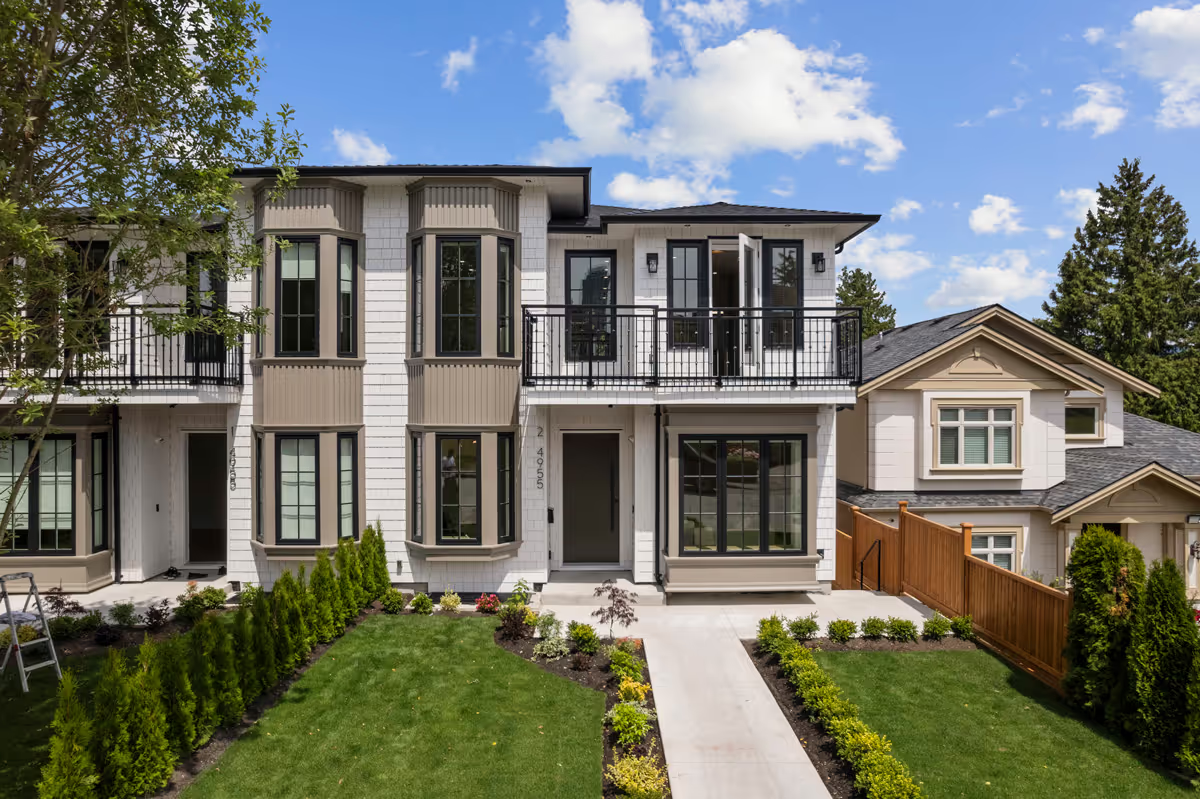
For most growing families, a multiplex tends to be the more natural fit. Here’s why.
Families usually want space, privacy, and a yard, and multiplex homes are designed around exactly that: multiple bedrooms across two or three levels, private outdoor space for kids and pets, and parking you don’t have to fight for. A lot of our homes also include a legal suite, which is a self-contained lower unit you can rent out as a mortgage helper, or keep for aging parents and grown kids. That makes multi-generational living genuinely workable rather than just a nice idea.
The lower strata fees matter for families too. Every hundred dollars a month that isn’t going to a parkade or a clubhouse is money you can put toward a mortgage, childcare, or savings. And since multiplexes sit on established residential streets, families get quiet, walkable surroundings plus access to good schools and parks.
All that said, a townhome community can be the better family choice when on-site amenities are the priority. Maybe you want a built-in playground, more visitor parking for extended family, or fully managed grounds so nobody in the house ever has to touch a lawnmower. If hands-off living is at the top of your list, don’t rule it out.
Lean toward a multiplex if you want:
Lean toward a larger townhouse community if you want:
If you read those two lists and the first one sounded like home, you’re exactly the kind of buyer multiplexes were made for.
It depends on what you value. A multiplex usually gives you more privacy, lower strata fees, private at-grade parking, and a faster build, while a large townhouse complex offers more on-site amenities and a broader resale market. For buyers who want a private, house-like home with low monthly costs, a multiplex is often the better choice.
A multiplex is a small building of usually six units or fewer on a single lot, often with private parking and low fees. A townhouse is typically one home within a much larger community of 20 or more units, with shared parkades, bigger common areas, and higher strata fees. The core difference is community scale, and everything else flows from that.
Usually, yes. Because a small multiplex has minimal common property and no parkade, elevator, or extensive amenities to maintain, fees are often under about $150 a month, compared with $400 or more in many large townhome complexes. Lower fees also mean less exposure to special assessments.
Often, yes. When you buy early into a small project, there’s usually room to select finishes, choose upgrades, or adjust certain layout details. That kind of flexibility is rare in large developments with standardized finish packages, so ask the builder what’s still open at the stage you’re buying.
A multiplex is a small, ground-oriented building with just a few homes, usually up to about six, and each unit can often be individually owned. An apartment building is larger, taller, and made up of stacked units that are typically rented or owned as condos. Multiplexes feel much more like houses than apartments do.
For most families, a multiplex offers more privacy, more outdoor space, attached parking, and lower fees, plus the option of a legal suite for multi-generational living or rental income. A townhouse community can be the better pick if you specifically want on-site amenities and fully managed grounds.
A multiplex. With fewer units, fewer shared walls, and private yards or decks, multiplex homes generally feel more like a detached house than units in a dense townhome complex do.
They can be. Lower carrying costs, income potential from legal suites, predictable completion timelines, and scarcity on desirable streets all support resilient value. As with any purchase, run your own numbers and consult a mortgage and tax professional. This is general information, not financial advice.
In real estate, a multiplex is a single residential building that contains several separate homes, such as a triplex (three units) or a fourplex (four units), usually up to about six units in total. Each home can be individually owned, often under strata title.
The most common drawbacks are higher monthly strata fees, less privacy from greater density and shared walls, reliance on a shared or underground parkade, exposure to special assessments in larger stratas, and limited room to customize. These are trade-offs for amenities and professional management, and they’re worthwhile for some buyers but not for others.
A small multiplex often finishes in under a year, while large, multi-phase townhouse complexes can take several years and are more prone to delays. That predictability is one of the biggest practical advantages of the multiplex model.
There’s no universal winner in the multiplex-versus-townhouse question. There’s only the home that fits your life. If you want amenities and a large, managed community, a townhouse complex can be a great choice. But if what you really want is a private, well-built home with your own yard, attached parking, low monthly fees, and the calm of a small community on a quiet street, a multiplex is hard to beat. And it’s an option a lot of buyers simply didn’t have a few years ago.
At Asthan Homes, multiplex homes are at the heart of what we build, and we’ve been doing it for more than two decades. We approach every home the way we’d approach building for our own family, because to us, that’s the whole point. If you’re weighing your options, we’d be glad to walk you through what’s available now, what’s coming next, and what might be the right fit for you. No pressure. Just honest guidance.
Ready to see multiplex living for yourself? Browse our available homes or get in touch, and we’ll help you find a home built for belonging. Explore Available Homes Contact Asthan Homes
This article is general information for homebuyers and is not legal, financial, or investment advice. Zoning rules, fees, and market conditions vary by location and change over time, so please confirm current details with your local municipality and your own professional advisors.